
|
Getting your Trinity Audio player ready...
|
I just stumbled upon a post on my social media feed with a quote from Zlatan Ibrahimović. I believe it was from one of the Croatian podcasts he did recently. It reminded me of an experience I had about a year or so ago when I found myself on the way to Portugal for a business leaders’ forum.
Sitting beside two senior tech consultants, I mentioned casually that one of the panellists at the upcoming event would be Luís Figo. Growing up deeply immersed in sports in the 2000s, it was a true delight watching the games during the “Golden Generation” era of European football. Boy, was I excited to have this football legend within reach and to have the opportunity for a quick chat with him.
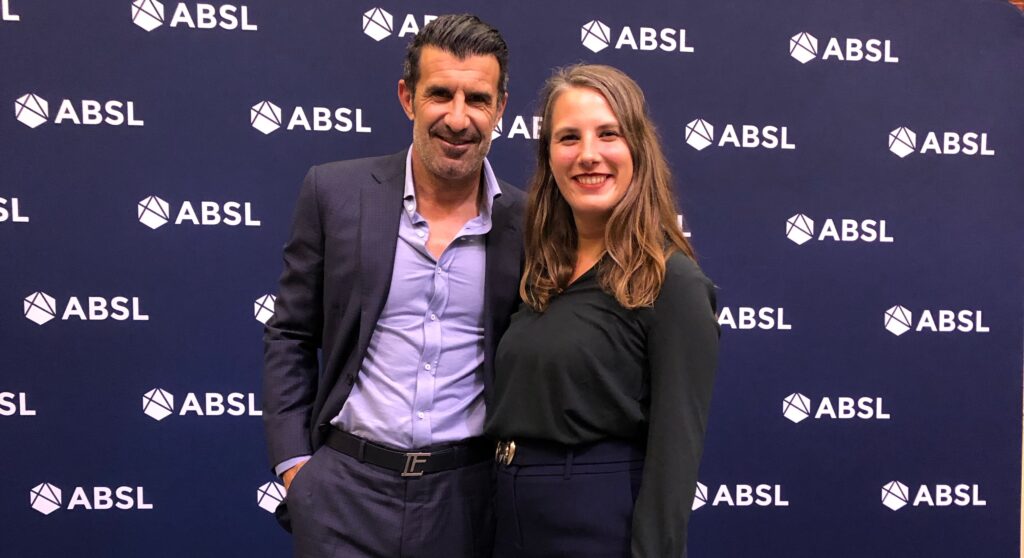
But beyond the excitement, the reaction of my fellow travellers was sceptical. Why would a footballer speak at a high-level business event? What value could he possibly add?
The logic seemed obvious to me then, and it seems even more obvious now.
If you want to understand leadership, resilience, mental clarity, accountability, and performance under pressure, few people are better qualified to teach you than elite athletes.
These aren’t abstract concepts debated in boardrooms or taught in MBA programmes. For someone like Figo, they were tested relentlessly, publicly, and without mercy, match after match, season after season.
There are very few professions where your performance is scrutinised by millions of people in real time, where failure is broadcast live, where criticism is immediate and often brutal, and where excuses simply don’t survive contact with reality. High-performing athletes live in environments where results matter every single day. They understand what it means to lose publicly, to adapt quickly, to rebuild when everything seems broken, and to come back stronger when the world expects you to crumble. They know how to lead without needing everyone’s approval, how to stand by difficult decisions under intense scrutiny, and how to function when pressure stops being an exception and becomes the baseline of existence.
Business and sport are not identical, of course. But at the highest level, the mental demands are remarkably similar. And ignoring what elite athletes can teach us about performance, leadership, and handling pressure isn’t just shortsighted but a genuine missed opportunity.
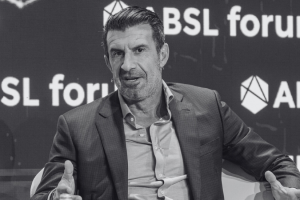
When I finally sat in that forum room in Porto and listened to Figo speak, everything I’d intuited was confirmed. What struck me wasn’t just the story of his controversial move from Barcelona to Real Madrid, though that alone could fill a case study on decision-making under pressure. It was his entire philosophy about what drives excellence and how one navigates the most difficult moments.
He spoke about recognition and how the lack of it changes everything. When you’re in a position where you feel your work isn’t valued, where the organisation doesn’t see what you’re contributing, that changes the calculation entirely. It’s not about ego but about knowing your worth and being willing to act on it. His move to Madrid wasn’t reckless. It was, as he put it, a bit selfish, but necessarily so. He had to think about his future, his family’s future and his professional trajectory.
Sometimes the right decision for you isn’t the popular one, and you have to be willing to live with that.
It really resonated with me when he said that what kept him focused through all the noise, all the criticism, all the pressure, was passion. It didn’t matter if he was playing in the street as a child or finishing his career at thirty-six. He loved the game.
That passion became the anchor.
When you’re genuinely passionate about what you do, you’re not distracted by external opinions. You’re not calculating salaries or worrying about perception. You just want to play. You want to compete, to perform, to be good at what you do.
If you’ve ever done sports, you know that failure is an integral part of it. You win some, you lose some. You never know what the outcome will be when you step on the field. But, as Figo said, “You don’t know success until you fail.” That’s not a platitude but a lived experience. Success is what you dream about at the start, but life isn’t made only of beautiful days. When you have a bad game, a bad performance, a bad day at the office, that’s when you learn. That’s when you discover what you’re made of. The talent is there, and it doesn’t disappear.
When things go wrong, there are only a few explanations: you’re not physically right, you’re going through something difficult outside of work, or you’ve lost confidence.
The solution isn’t complicated – you work harder. You support the talent that’s already there and help it through the difficult moment.
What makes Figo’s perspective so valuable is that it comes from someone who lived in the crucible. He was born into a club with the motto “effort, dedication, devotion, and glory.” He carried that with him everywhere. He never claimed to be the most talented, but he worked relentlessly, dedicated himself completely to his profession, and pushed himself to achieve goals he’d dreamed about as a child. That mindset, that refusal to coast on talent alone, translated directly into everything he does outside of football.
He also spoke about leadership in a way that cut through all the corporate jargon. For him, a leader isn’t someone who’s born with charisma or given power.
A leader is someone people follow because of what they do, not who they are.
You become a leader by setting an example – by showing up, by working toward winning every day, by trying to be better. Your teammates see that and think, “This person is going in the right direction. I want to follow.” That’s real leadership. Not speeches. Not titles. Just consistent action in pursuit of excellence.
You can watch the fireside chat here:
Now, the best learning is experiential. There is no match to the wisdom earned through your own mistakes, victories, and late-night reckonings with failure. No amount of reading or listening can replace that. Unfortunately, we don’t have unlimited time or unlimited opportunities to fail and learn from every possible situation. This is where voices like Figo’s become invaluable. They serve as compressed experiences, offering hard-won lessons from arenas most of us will never enter. They give us pattern recognition for situations we haven’t yet faced, mental frameworks for handling pressure we haven’t yet encountered. It’s not a substitute for doing the work yourself, but it’s a good head start.
So when my fellow travellers questioned why a footballer would speak at a high-level business event, I think they misunderstood what elite sport actually is. It’s a crucible for testing everything we claim to value in business: leadership, adaptability, resilience, accountability, mental toughness. The difference is that in sport, you can’t hide behind strategy decks or quarterly reports. The scoreboard doesn’t care about your narrative. The crowd doesn’t accept excuses. And champions are made not by avoiding pressure, but by learning to perform inside it.
That’s why I listen to people outside of the immediate business domain, and I recommend everyone do the same. Not because sport is business, but because the lessons are transferable, and the mental frameworks are battle-tested. If you want to understand what high performance actually looks like when the pressure is real and the stakes are high, you could do much worse than listening to someone who made the most controversial move in football history and came out the other side stronger, clearer, and more successful than before.
Read Next
- All Posts
- Beyond Borders
- Business
- Personal Development
- Research

Jealousy isn’t just some toxic feeling we need to eliminate. It’s actually trying to tell us something important about our...

After attending Web Summit so many times, this year I chose differently. Here's what founders and leaders should consider before...

Ever considered the leadership lessons tango imparts? Discover insights that foster collaboration, communication, trust, creativity, and synergy.