
|
Getting your Trinity Audio player ready...
|
When someone hurts us, betrays our trust, or causes harm to others and the planet we love, our instinct screams for punishment. We wish them ill. We fantasise about their downfall. In workplace conflicts, political divides, and responses to terrorism, our collective response often defaults to hatred, condemnation, and the dark satisfaction of imagined retribution.
Hold on a moment…
What if this instinct, this seemingly righteous anger, is actually poisoning us? What if the energy we invest in wishing harm on others is the very force keeping us trapped in cycles of pain, division, and destruction?
There’s another way.
A way that neuroscience, psychology, and ancient wisdom all converge to support. It’s deceptively simple, radically difficult, and profoundly transformative:
Wishing love for everyone, especially those whose behaviour we cannot support.
This isn’t about being naive. It’s not about condoning harmful actions or abandoning accountability. It’s about understanding a fundamental truth that both science and spirituality confirm:
People who act from the place of love do not cause harm. People who harm others are acting from fear, disconnection, shame and an absence of love in their hearts.
PSA: This is a long read, so please arm yourself with attention and intention as you move through the following sections:
The Duality at the Heart of Human Experience
Why Wishing Harm Harms Us Most
What Changes When Hearts Are Full of Love
neuroscience and psychology
criminal justice
education
The Sceptic’s Questions, Answered
The Practice of Wishing Love ft. meditation recommendation
The Ripple Effect: One Heart at a Time
The Choice, Again and Again
If you don’t make it in one go, you can always return to this piece and continue where you left off. 🙂
The Duality at the Heart of Human Experience
Although we experience many different emotions, they arise from a fundamental polarity. Ancient spiritual and indigenous teachings have long recognised this – light and shadow, attachment and non-attachment, connection and separation… Modern psychology and neuroscience have explored parallel terrain.
At the most basic level, all human action ultimately springs from one of two fundamental states: love or fear.
Love expands. It opens. It connects. It sees possibility, cultivates compassion, and recognises our shared humanity. From the state of love, we create.
Fear contracts. It closes. It separates. It sees threats, generates aggression, and builds walls between self and other. It destroys.
This convergence between ancient wisdom and modern science isn’t coincidental. Research in neuroscience reveals that love and fear activate distinctly different neural pathways in our brains.
When we experience fear, our sympathetic nervous system activates the fight-flight-freeze response, flooding our bodies with stress hormones like cortisol and adrenaline. This redirects blood flow toward survival-oriented muscles and vital organs while modulating activity in the prefrontal cortex, i.e. the hub for rational thinking and emotions. Our cognitive flexibility narrows, our immune function suppresses, and we literally become less capable of connection, compassion, and nuanced thinking.
Conversely, when we operate from love, compassion, or genuine connection, our parasympathetic nervous system engages what researchers call the “tend and befriend” response. This releases oxytocin and endorphins, expands our cognitive flexibility, enhances immune function, and improves our capacity for complex decision-making and empathy. Brain imaging studies at Harvard Medical School have shown that when we’re engaged in romantic love or compassionate connection, the neural pathway responsible for negative emotions such as fear and social judgment actually deactivates.
Why Wishing Harm Harms Us Most
When we direct hatred, condemnation, or ill-wishes toward others, whether a person who wronged us, a politician whose work and policies appal us, or extremist groups committing atrocities, we’re not just expressing righteous anger. We’re actively bathing our own nervous systems in the neurochemistry of fear and threat.
Consider what happens when you wish someone dead or fantasise about their suffering. Your amygdala, i.e. the brain’s fear centre, activates. Your body tenses. Your heart rate increases. Your breathing becomes shallow. You’re essentially putting yourself through a stress response, over and over, reinforcing neural pathways of aggression, separation, and pain.
This isn’t just unpleasant in the moment. Research on the effects of chronic anger and resentment shows these states are associated with cardiovascular disease, weakened immune function, depression, and shortened lifespan. When we’re in a fear state, our bodies activate the sympathetic nervous system, which releases stress hormones like cortisol and adrenaline, narrows our cognitive focus, restricts blood flow to the prefrontal cortex, and suppresses immune function.
The person you’re wishing harm upon may never know about your ill-wishes. But your body knows. Your nervous system knows. Your heart knows.
You are the one living in the energy of hatred. You are the one whose well-being deteriorates. You are the one reinforcing neural patterns of fear, aggression, and separation – patterns that will inevitably shape how you show up in all your relationships, not just with those you despise.
What Changes When Hearts Are Full of Love
Would terrorism exist in a world where every person woke up with their heart full of love instead of fear? Not romantic love, but the kind of deep kindness and compassion that recognises our fundamental interconnection. Would exploitation of the Earth continue? Would workplace bullying, domestic violence, or systemic oppression persist?
The answer is no.
People operating from genuine love don’t harm others because harm requires a sense of separation. It requires seeing another being as “other,” as less valuable, as expendable. Love, by its very nature, dissolves these boundaries. Indigenous traditions from all corners of the world knew this. Research across multiple disciplines confirms this:
In neuroscience and psychology
From my previous lines, you have some sense of research in neuroscience. Building upon it, people who practice loving-kindness meditation, i.e. a technique specifically designed to cultivate unconditional goodwill toward all beings, show measurable improvements across nearly every dimension of well-being.
Studies using fMRI imaging have shown that when people engage in compassion meditation, their brains demonstrate heightened response in the medial orbitofrontal cortex, nucleus accumbens, and ventral tegmental area. In other words, brain regions associated with positive affect, affiliation, and reward processing are activated. Even more remarkably, these changes occur alongside increases in compassion-related feelings and attributions, including increased tenderness and reduced blame.
Further, when engaged in a compassion meditation, studies document increased positive emotions, enhanced social connectedness, reduced depression and anxiety, decreased chronic pain, improvements in PTSD symptoms, better cardiovascular health, and even longer telomeres (markers of cellular ageing and longevity). In one landmark study, seven weeks of loving-kindness meditation increased love, joy, contentment, gratitude, pride, hope, interest, amusement, and awe, which then produced increases in mindfulness, purpose in life, social support, and decreased illness symptoms, ultimately predicting increased life satisfaction and reduced depressive symptoms.
In criminal justice
Restorative justice programs, rooted in indigenous wisdom and practices focusing on compassion and healing over punishment, consistently demonstrate better outcomes than traditional retributive approaches.
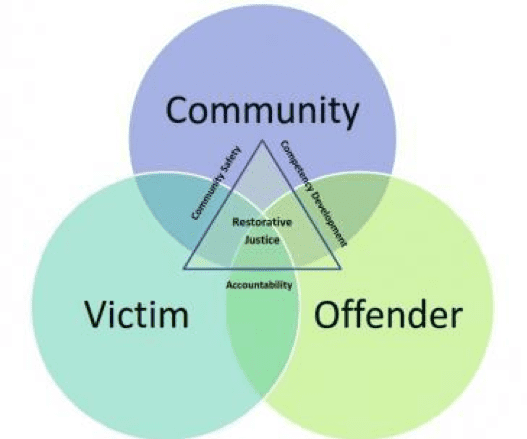
We can see examples of this across the world, maybe most notably in some of the severe cases, like apartheid in South Africa or genocide in Rwanda.
“As I walked out the door toward the gate that would lead to my freedom, I knew if I didn’t leave my bitterness and hatred behind, I’d still be in prison.”
— Nelson Mandela
Meta-analyses show that restorative justice programs were associated with significant reductions in recidivism, as well as greater victim and client satisfaction, improved perceptions of procedural justice, and enhanced client accountability compared to traditional legal system approaches. When offenders encounter compassion instead of condemnation, they’re more likely to take genuine responsibility, make meaningful amends, and transform their behaviour.
In education
Schools implementing compassion-based approaches rather than punitive discipline report reduced suspensions, improved student engagement, and better academic outcomes. Research shows that integrating restorative justice practices decreases suspensions, just as reinforcement-focused positive behaviour interventions do.
Perhaps most striking, compassion is trainable.
Compassion is in our DNA. We don’t have to learn it; we just have to remember it.
Research at the University of Wisconsin-Madison demonstrated that brain circuits used to detect emotions and feelings were dramatically changed in subjects who had extensive experience practising compassion meditation. This practice literally rewires the brain, making compassion more of a default response than an effortful choice.
The Sceptic’s Questions, Answered
Wishing someone love is not the same as excusing their behaviour or abandoning accountability. In fact, compassion-based approaches consistently produce more accountability than punishment does.
When we approach someone from a place of genuine compassion, recognising their fundamental humanity while clearly addressing the harm they’ve caused, we create conditions where they’re more likely to take genuine responsibility. Punitive stimuli activate the brain’s fear and threat circuits, notably the amygdala, which processes fear and aggression, leading to stress responses and emotional distress that undermine cognitive functions critical for adaptive behaviour. Fear-based punishment often produces compliance without true transformation, or worse, generates defensive reactions, denial, and escalation.
Compassion, conversely, activates the brain’s reward pathways and regions related to empathy and positive emotions, creating neurological conditions that actually support genuine behaviour change.
This is why imagery of restorative justice, as opposed to retributive justice, is positively associated with lower levels of cardiovascular stress, lower levels of negative emotions like anger and fear, and better recovery from heart rate reactivity.
This may be the hardest part to accept: wishing someone love doesn’t mean approving of their actions. It means recognising that their capacity to commit atrocities comes from a profound wound and absence of love, connection, and compassion in their own heart.
Consider the research on what creates violent offenders, terrorists, and perpetrators of extreme harm. Consistently, we find histories of trauma, disconnection, dehumanisation, and, crucially, an absence of experiencing genuine love and belonging. Neuroscience research shows that empathic brain responses can easily be blocked not just in psychopaths but in all of us, depending on whether we perceive others as “ingroup” or “outgroup” members.
When we wish love for someone who has caused terrible harm, we’re not minimising the harm. We’re recognising that if their heart were truly full of love, if they deeply felt their interconnection with all beings, they would be incapable of that harm. We’re wishing for the very transformation that would prevent future harm.
Yes, feeling anger is human and often appropriate. Anger can be a powerful catalyst for necessary change and boundary-setting. But there’s a crucial difference between feeling anger in a moment and dwelling in hatred, between expressing outrage at an injustice and wishing perpetual suffering upon those who perpetrated it.
Fear and love are the two most powerful motivators of human behaviour. When we fear, we actively try to avoid or eradicate the source of our fear to diminish painful, unwanted thoughts and feelings. When we love, we actively try to engage with or advance the source of our love to strengthen pleasant, wanted thoughts and feelings.
The question is, which state do you want to operate from? Which state actually creates the change you seek?
The Practice of Wishing Love
If you’re willing to experiment with this radical approach, this is how you can begin:
Start with recognition
When someone’s behaviour triggers anger, hatred, or the desire for them to suffer, pause. Recognise that this person is acting from fear, disconnection, or an absence of love in their heart. This doesn’t excuse them, it explains them.
Acknowledge your own pain
Don’t bypass your legitimate feelings. “This person’s actions have caused real harm. I feel angry/hurt/outraged, and those feelings are valid.”
Shift to the wish
“I wish that this person wakes up tomorrow with their heart full of love instead of fear. I wish that they experience the kind of profound compassion and connection that would make causing further harm impossible for them.”
Notice what changes
Pay attention to what happens in your own body, mind, and heart when you make this shift. Often, you’ll feel a softening, an opening, a release of the tension that hatred creates.
Extend the practice
Include yourself in these wishes. Include people you love. Include strangers. Include all beings. Loving-kindness meditation traditionally moves through these circles: self, loved ones, neutral people, difficult people, and all beings.
Below is the guided meditation I love to do, in case you wish to try it. You will need to set aside 50ish minutes for it, but it has immense heart-opening power. It is free of charge and available in many languages.
The Ripple Effect: One Heart at a Time
You might be thinking: “This is beautiful, but what about the scale of problems we face? How does my individual practice of wishing love change systemic injustice, environmental destruction, or geopolitical conflict?”
The answer lies in understanding how change actually happens.
Every system, whether a family, workplace, community, or society, is made up of individuals. Each individual operates from either a state of love/connection/expansion or fear/separation/contraction in any given moment. These individual states create collective patterns. When more individuals operate from love, the collective field shifts.
This is documented in social psychology research on phenomena like “moral elevation.” Witnessing acts of kindness increases the likelihood that we’ll perform kind acts ourselves. When you begin operating from a place of love rather than fear, you model a different way of being. You become, quite literally, contagious with compassion.
Moreover, when you stop investing your energy in hatred and condemnation, you free up enormous psychological and emotional resources. Resources you can redirect toward constructive action, toward building the world you want to see, toward creating solutions rather than amplifying problems.
The most radical act of resistance against a fear-based world is to refuse to operate from fear yourself.
The Choice, Again and Again
Every moment offers a choice:
operate from love or
operate from fear.
When your coworker undermines you, when the politician you despise wins an election, when you read about another act of violence or exploitation, when someone cuts you off in traffic… You choose.
Wishing them suffering keeps you trapped in the very energy that perpetuates harm. Wishing them love, genuinely wishing that their heart fills with the compassion and connection that would make causing harm impossible, sets you free.
It sets you free to act from clarity rather than reactivity. To build rather than merely oppose. To heal rather than perpetuate wounds. To be the change rather than simply demanding it from others.
This doesn’t mean you stop holding people accountable. It doesn’t mean you stop fighting injustice. It means you do these things from a place of love rather than hatred, from connection rather than separation, from a genuine wish for collective wellbeing rather than from a desire for revenge.
The world you wish for begins in your own heart, in each moment, with each person you encounter – especially those whose behaviour you cannot support.

I trained myself to pause when I notice or experience toxic behaviour. In that moment, I remind myself that this person’s capacity to harm comes from an absence of love in their heart. What I then do is wish them love from the depths of my being. Not because they deserve it in some moral sense, but because love is the only thing that truly transforms. Not for their sake alone, but for mine, for ours, for the world we’re creating together with every thought, every wish, every choice.
It’s the hardest practice. It’s also the most radical act of world-building available to each of us, every single day.
What do you choose?
Read Next
- All Posts
- Personal Development

Jealousy isn’t just some toxic feeling we need to eliminate. It’s actually trying to tell us something important about our...

Creative blocks usually have less to do with motivation and more to do with overstimulation. Here is what creativity needs...

Do you think we undervalue slowness in modern life? What would happen if you chose the slower route more often?